Public Access
Public Access: Who Gets Online and How
The digital divide, library access points and low-cost internet options: how Americans get online when service is scarce.
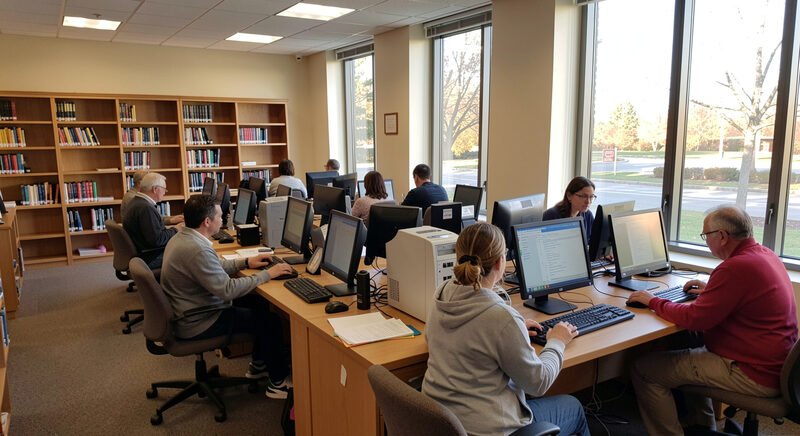
A home broadband subscription is easy to treat as universal, yet millions of American households still lack one, and millions more share connections that are slow, capped or unreliable. The free-nets treated public access as a service a community owed itself; this section looks at how that need is met today. The guides here map the gap, the places that fill it, and the programs that lower the price of getting online.
What the guides in this section cover
The starting point is the gap itself. The Digital Divide, in Plain Terms explains who is still offline in the United States, why the divide is about more than coverage maps, and what it costs in schoolwork, job searches and health care. The most visible heir to the free-net model is the public library. Libraries as Today's Public Access Points walks through what a modern library offers, from the computer row and free wifi to hotspot lending and staff who sit with patrons through a form, a password reset or a first email account.
For households where the barrier is price rather than place, Free and Low-Cost Internet Options in the US lays out the realistic menu: the federal Lifeline subsidy, low-income tiers offered by major providers, library hotspot loans, refurbished-equipment programs and community networks. Each option comes with its own eligibility rules, and the guide lists what to gather before applying.
How this section connects to the rest
Public access sits between the past and the build. The systems documented in Network History existed because dial-up access was otherwise out of reach; the projects described in Community Builds exist because, decades later, that is sometimes still true. Reading the divide first makes both stories easier to place.
How to use these guides
Each guide is built to answer one question completely. A reader looking for a program to apply for can go straight to the options guide and its application checklist. A reader trying to understand the landscape should start with the divide guide, which separates coverage gaps from adoption gaps, a distinction that decides which fix applies. And anyone whose first free option is the library will find the full menu in the library guide, including the lending programs that are rarely advertised.
Where the numbers come from
The guides in this section cite the public sources the field actually uses: federal survey data from the NTIA, the FCC's broadband maps, the rules pages of the programs themselves. Where a program changed recently, as with the end of the Affordable Connectivity Program, the guide says when and what replaced it. Readers checking a specific address or eligibility should always finish at the program's own page, because rules move faster than any article.
Who this section is for
These guides are written for three kinds of readers. People helping someone else get online will find the practical lists they need: which programs exist, what proof they ask for, where the public terminals are. Staff and volunteers at libraries, schools and nonprofits will find the vocabulary to explain options to patrons without overselling them. And readers who simply want to understand why a rich country still has a connectivity gap will find the plain version, with the official sources named so the numbers can be checked.

Public Access
The Digital Divide, in Plain Terms
Who still lacks reliable internet in the US, what the gap costs in school and work, and where the divide is measured.
Coverage, price and skills, in plain terms.

Public Access
Libraries as Today's Public Access Points
Public libraries inherited the free-net role: free computers, wifi, hotspot lending and staff who help people get online.
The computer row that inherited the mission.
Public Access
Free and Low-Cost Internet Options in the US
Lifeline, ISP low-income tiers, library hotspot loans and community networks: real options when broadband is unaffordable.
Lifeline, provider tiers, hotspot loans.