Community Builds
Community Broadband, Explained: Who Can Build It
Municipal networks, cooperatives and public-private builds: how communities create their own broadband and what it takes.
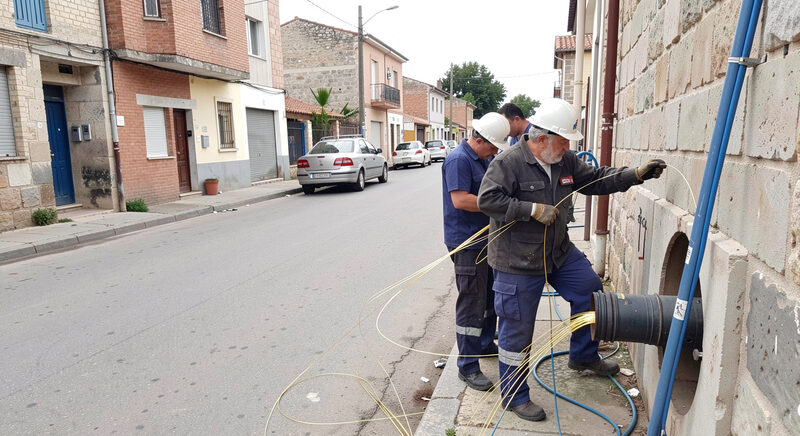
Community broadband is the name for internet service built and owned close to home: by a city, a cooperative, a nonprofit or a partnership between them. It exists where the private market left a gap, and it ranges from citywide fiber utilities serving hundreds of thousands to volunteer wireless co-ops serving a single valley. The models differ less in technology than in who owns the network and who it answers to.
When the market leaves a gap
A community build usually starts with a documented failure: addresses no provider will serve, prices no household can pay, or service so unreliable that local businesses leave. The case for building rests on the divide mapped in the digital divide guide, and the first real step is proving the gap exists rather than assuming it, a process covered in the startup guide.
The municipal model
The most visible form is the municipal network, where a city or its utility builds and operates broadband as a public service. The best-known American example is Chattanooga, Tennessee, where the municipal electric utility EPB built a fiber network that made the city an early gigabit market; Wilson, North Carolina's Greenlight is another frequently cited case. Municipal networks benefit from existing assets, poles, rights of way and billing systems, and from the ability to finance over decades like other infrastructure.
The trade-off is exposure: a public network's costs and prices are debated in open meetings, and the build competes for capital against roads and water. Several states also restrict or complicate municipal broadband by law, which is why the legal check comes first.
The cooperative model
The cooperative is the older institution. Member-owned electric and telephone co-ops wired rural America in the last century, and hundreds have extended into broadband, building fiber to members their incumbent providers never reached. A co-op already owns the poles, the trucks and the customer relationship, and its members are the service territory.
Co-ops answer to members rather than shareholders, which changes the math: a build that would fail a commercial return test can still make sense to owners who are also the subscribers.
Nonprofits and partnerships
Between the two sit nonprofit builders and public-private partnerships. Nonprofits build targeted networks for housing developments, tribal lands or underserved districts, often funded by grants and donations. Partnerships pair a public body, which contributes assets, permits or anchor demand, with a private operator that builds and runs the network. Each form trades control for speed differently, and the contract details, who owns the fiber and for how long, decide whether the public interest survives the deal.
What a build actually requires
Whatever the model, the requirements rhyme. A feasibility study maps demand, assets and costs. Pole attachments or underground rights of way must be secured, which is where timelines quietly double. Backhaul, the connection from the local network to the wider internet, must be bought at a workable price. Financing comes from reserves, bonds, grants or subscribers, and the business case is run against take rates, the share of passed homes that actually subscribe, which past projects place in the 30 to 60 percent range for successful builds.
The state-law patchwork
American community broadband runs under a patchwork of state rules. A number of states impose procedural or financial barriers on municipal networks, from referendum requirements to restrictions on service territory, and the list changes as legislatures act. Checking state law is not a formality; it is the step that decides which model is even available.
What the successful builds share
Across the documented cases, the builds that lasted share recognizable traits. They started from a named gap rather than a general aspiration. They kept an institutional anchor with a stake in the outcome, a utility, a co-op membership or a city that answered for the project. They published their take-rate assumptions and met them, or adjusted visibly when they did not. And they treated adoption work, sign-up drives, digital skills help, low-income tiers, as part of the build rather than a follow-on, because a network nobody can afford to join has not solved the problem it was built for.
How to judge a proposal
A community weighing a build, or a resident reading a ballot measure, can apply a short set of tests. Does the plan name who owns the network and for how long? Does it show the take-rate assumption and the subsidy if subscriptions fall short? Does it price the ongoing operation, not just the construction? And does it say what happens to subscribers if the operator changes or the partnership expires? Proposals that answer all four in public documents are the ones past experience says to take seriously.
Where to look next
The standard reference is the Institute for Local Self-Reliance's tracker at communitynets.org, which maps municipal and cooperative networks and keeps state-by-state summaries of the legal landscape. For a neighborhood-scale alternative that skips fiber entirely, the mesh guide covers the rooftop model, and the history of how communities last pooled resources for access is in Network History.
None of these models is inherently the best; each is the answer to a different local question. The municipality answers scale, the co-op answers rural trust, the nonprofit answers targeting, the partnership answers speed. The communities that chose well chose the model that matched the gap they had actually measured.